TL;DR
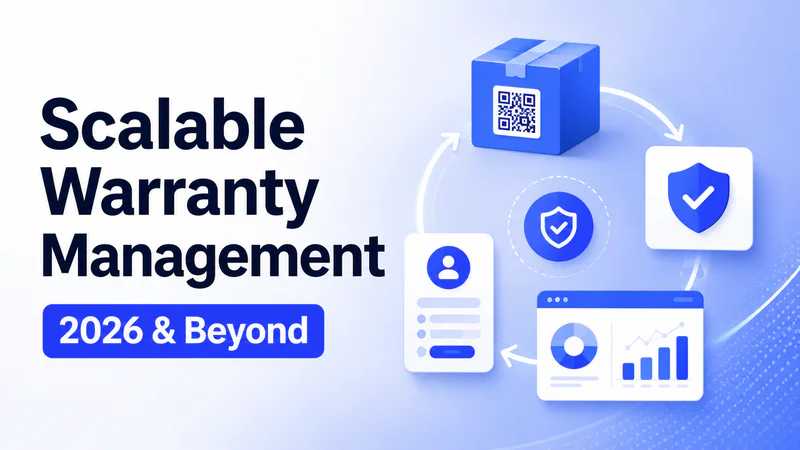
Building a warranty management process that scales means moving through six stages: warranty policy definition, product registration, claims intake, validation and approval, resolution and fulfillment, and ongoing analytics. Each stage compounds on the previous one. Skip or weaken any of them and the cracks show up fast as volume grows.
If you want to automate this entire process without stitching together spreadsheets, helpdesk tickets, and manual follow-ups, Dyrect is the purpose-built warranty management software for D2C and Shopify brands. It handles product registration via QR code, automated claims workflows, serial number validation, resolution tracking, and post-purchase analytics in one system, so your team stops doing warranty detective work and starts running a process that actually scales.
Every D2C brand eventually hits the same wall. Orders are growing, products are shipping, and somewhere in between, warranty requests start arriving - in email inboxes, in DMs, in support tickets with no order number attached and no way to verify coverage without hunting through three spreadsheets.
And the response, usually, is to add another column to the sheet.
For a while, that works. Then it doesn't. A claim sits in a folder for two weeks. A customer emails for the fourth time. Someone on the ops team realizes they have no idea how many claims are open right now, let alone how long they've been pending.
This isn't a staffing problem. It's a process problem. And the fix isn't hiring another support agent, it's building a plan for warranty management designed to scale before you need it to.
This guide walks you through what a scalable warranty management process actually looks like, stage by stage, and what separates brands that handle warranty well from the ones that let it quietly erode customer trust.
What Is Warranty Management (And Why the Standard Definition Misses the Point)

Most definitions of warranty management sound like this: the process of tracking and administering product warranties, from registration to claims resolution. Accurate. Also dangerously incomplete.
For a D2C or Shopify-native brand, warranty management is more than claims processing. It's the only structured post-purchase touchpoint you own. Your customer bought the product. You shipped it. And then, unless something breaks, you never talk to them again.
Warranty registration is the moment in between. It's when a customer takes an action to connect with your brand after the sale. If your warranty management process is well-designed, that moment becomes a source of first-party data, a CRM touchpoint, a repeat purchase trigger, and a customer satisfaction signal. If it's poorly designed, or doesn't exist as a designed process at all, that moment never happens.
Industry data puts average warranty registration rates below 10% for brands using traditional methods. Over 90% of your customers disappear after the purchase. You don't know who they are. You can't market to them. You can't identify defect trends early. You can't offer extended warranty upsells. The sale closes, and the relationship quietly dies.
Building a warranty management process that scales isn't just an operational goal. It's a retention and revenue decision.
The Warranty Management Process: Six Stages Every Brand Needs

A well-built warranty management process moves through six clearly defined stages. Each one builds on the previous. Skipping or weakening any stage creates problems that compound over time.
Stage 1: Warranty Policy Definition
Before you can manage warranties, you need to know what your warranty actually covers. This sounds obvious. Yet the default for growing product brands is to write warranty terms vaguely, on the fly, usually copied from another brand's website.
Your warranty policy needs to answer five questions clearly:
What's covered? Manufacturing defects, workmanship failures, component failures under normal use. Be specific about product categories if you sell multiple SKUs with different durability profiles.
What's excluded? Accidental damage, misuse, unauthorized modifications, normal wear and tear. Clear exclusions protect you from fraudulent claims and set honest expectations with customers.
For how long? Duration varies by product category. Consumer electronics typically run one to two years. Appliances can run longer. If you're considering a lifetime warranty as a differentiator, factor in the claims cost modeling before committing.
What's the remedy? Repair, replacement, or refund. Define the hierarchy. What gets repaired versus replaced? Under what conditions do you issue a full refund? Ambiguity here creates inconsistency in claims handling and customer frustration.
How does a customer claim it? Define the process upfront. Customers shouldn't have to guess whether to email support, fill a form, or call a number.
A clear warranty policy isn't just legal protection. It's the foundation of a consistent claims process. Without it, every claim becomes a judgment call. At low volume, that's manageable. At scale, it's chaos.
Stage 2: Product Registration
Product registration is where the warranty management process actually begins for your customer. It's also where the buyer relationship either forms or quietly disappears.
Traditional warranty registration involves a paper card in the box, an email instruction, or a link buried in the order confirmation. The registration rate for these methods is typically below 10%. Customers either don't notice, don't bother, or don't complete the form before they forget about it.
The shift that changes this is reducing friction to near zero. QR code-based registration on packaging or inside the box lets a customer register their product in under a minute from their phone. No login required, no long form, no manual serial entry. They scan, confirm, done. Brands using this approach see dramatically higher registration rates.
Registration data is the operational backbone of everything that follows. When a customer registers, you capture their contact information, purchase date, product SKU, and serial number in one go. That data feeds your claims validation process, your CRM, your defect analysis, and your re-engagement campaigns. Without it, every claim that comes in starts from scratch: you have to verify everything manually, hope the customer kept their receipt, and cross-reference order systems one by one.
Equally important: Shopify order data only captures customers who bought directly from your store. If you sell through retail, Amazon, distributors, or offline events, warranty registration is the only mechanism for capturing those buyers into your system. Brands without a registration process for offline buyers are operating with a significant blind spot into who actually owns their products.
Stage 3: Claims Intake
When a customer has a problem, how they file a claim shapes the entire experience. A slow, confusing intake process is where warranty operations first break under pressure.
At low volume, email works. Customers write in, your team replies, things get resolved. But email is unstructured. Every claim arrives in a different format. Some customers include serial numbers. Some don't. Some attach photos. Some send three follow-ups before you've even read the first message. Your team spends time gathering information instead of resolving issues.
A scalable claims intake process does two things. First, it gives the customer a structured path to submit a claim: a form that captures serial number, issue description, photo evidence, and purchase proof upfront, rather than chasing for it afterward. Second, it routes incoming claims automatically based on predefined rules, by product type, issue category, and claim value, so the right person gets the right claim without manual triage.
The registration data you captured in Stage 2 is what makes intake fast. When a customer has already registered their product, your system can pre-fill the claim form with their product details and warranty coverage dates. Validation becomes instant. You already know what they own and when they bought it. The customer just describes the problem.
Without that registration foundation, every claim intake restarts the verification process from zero.
Stage 4: Validation and Approval
Claim validation is where brands bleed time and money if the process isn't structured. Validating a claim means confirming three things: the customer owns the product, the product is within the warranty period, and the reported issue falls within warranty coverage.
Manually, this means checking order records, cross-referencing serial numbers, reviewing photos, and making judgment calls on whether an issue is a manufacturing defect or accidental damage. For a support team handling dozens of claims daily, that's a half-day task before you've resolved a single one.
Automated validation connects claim submissions directly to your product and order database. When a claim comes in, the system checks coverage dates, validates serial numbers, and flags out-of-scope issues automatically. Claims that pass validation move to the next stage. Claims that don't pass get a structured response, not a vague email from whoever happened to open the inbox that morning.
Serial number validation is particularly important for electronics, appliances, and any product category prone to fraudulent claims. Without it, you're relying on customer-provided information and the judgment of individual team members. With it, you have a verifiable audit trail for every decision.
Claim approval rates typically run between 70% and 85% for well-managed warranty programs. Below 70% often indicates overly restrictive policies or poor communication of what's covered. Above 90% may signal insufficient validation. Tracking this number over time tells you whether your policy and process are calibrated correctly.
Stage 5: Resolution and Fulfillment
Resolution is what the customer actually experiences. Everything before this is internal. This is where the warranty promise becomes real.
Resolution pathways split into three main tracks: repair, replacement, or refund. Each requires a different operational workflow. Repair typically involves a return shipping label, service center routing, and a defined turnaround time. Replacement triggers inventory allocation and outbound logistics. Refund involves payment processing and, often, product return.
Customer satisfaction at this stage doesn't live or die on which resolution path you take. It lives or dies on communication. Customers filing warranty claims are already in a moment of frustration. A claim they can't track, an update they have to chase, or a timeline you can't clearly communicate makes the experience worse, not just neutral.
A scalable resolution process keeps the customer informed at every status change. Claim received. Validation complete. Replacement approved. Shipped. Delivered. Each status triggers an automated notification so your team isn't fielding status calls while trying to process the actual resolution.
Define your resolution SLAs before you need them. What's your target turnaround for standard claims? For high-value claims? For cases that require repair rather than replacement? Setting these internally means you can measure against them, and communicating them to customers sets expectations that prevent the "why is this taking so long" follow-up.
Stage 6: Data, Analytics, and Continuous Improvement
Warranty resolution isn't the end of the process. The data from every claim you receive is operational intelligence, and the brands that treat it that way compound an advantage over time.
Claim data tells you which SKUs are generating the most failures and why. It tells you whether a defect pattern is product-design related or manufacturing-process related. It tells you which resolution types cost the most, which suppliers are generating above-average warranty returns, and whether your claims rate is trending up or down over time.
Brands that close the loop between warranty data and product development consistently reduce their claims rate over time. They catch defects earlier, fix them faster, and design the next product version with real-world failure data rather than assumptions.
Beyond product quality, registration and claims data feeds your marketing layer. A customer who registered their product eight months ago and is now approaching their warranty expiration is a natural candidate for an extended warranty offer. A customer who filed a claim six weeks ago and had it resolved quickly is a candidate for a re-engagement sequence. Warranty data, when connected to your CRM and marketing tools, becomes a retention engine.
What a Warranty Management Plan Should Include

A warranty management plan is the documented framework that governs how your warranty process operates. Not the software. The operational rules that the software runs on.
Your warranty management plan should cover:
Policy terms. What's covered, what's excluded, duration, and remedy structure. This lives as a customer-facing document on your website and as an internal reference for your claims team.
Intake and triage rules. Which channels do claims come through? How are they classified? Who handles high-value claims versus standard ones?
Approval criteria. What does your team check to validate a claim? In what order? What qualifies as an acceptable photo of damage? What serial number format are you validating against?
Resolution SLAs. Repair turnaround targets. Replacement shipping timelines. Refund processing windows. These become your measurable service standards.
Escalation paths. What happens when a claim falls outside standard coverage? Who makes the call on grey-area cases? How are high-value or high-profile cases escalated?
Integration with other systems. How does warranty data flow to your CRM? Your helpdesk? Your inventory and logistics tools? Gaps here create data silos that undermine every other part of the process.
Review cadence. How often do you review your claim data for product defect trends? Who owns that review? What triggers a policy update?
Without a documented plan, your warranty management process is only as good as your best team member's memory. When they're off, or when volume spikes, consistency breaks down.
Signs Your Warranty Process Is Breaking Down

The breakdown rarely announces itself. It happens gradually, claim by claim, until the symptoms are obvious and the damage to customer experience is already done.
Watch for these signals:
Resolution time keeps creeping up. If average time to resolve a claim was four days six months ago and is now nine days, your process hasn't scaled with volume. The manual steps that were fast at low volume are now bottlenecks.
Your team is doing detective work on every claim. If someone has to log into Shopify, search an order, export a CSV, open a spreadsheet, and cross-reference a serial number just to confirm a customer is covered, that's improvised verification, not a process. At scale, it breaks.
You're finding out about product defects from customers, not from your data. If a quality issue reaches ten claims before anyone flags it as a pattern, your analytics layer isn't working. You're reactive instead of proactive.
Warranty claim volume is a black box to leadership. If the CEO asks "how many claims did we resolve last month" and the answer requires someone to count rows in a spreadsheet, your reporting is broken.
Customers are following up on their own claims. Every follow-up email a customer has to send is a signal of process failure. If claim status check-ins are generating support tickets, your communication loop isn't closed.
What Are the KPIs for Warranty Management?

Tracking the right metrics is what separates a warranty program that improves over time from one that just processes claims and moves on. These are the core KPIs every brand running a warranty management process should measure.
Warranty Registration Rate
The percentage of products sold that are registered by customers. Low registration rates, below 15–20% for D2C brands using digital methods, indicate friction in the registration experience, insufficient post-purchase communication, or both.
This is the leading indicator for everything downstream. Low registration means incomplete data, harder claim validation, and weaker post-purchase engagement.
Claim Rate (Warranty Claims Rate)
The percentage of products sold within a given period that generate a warranty claim. Industry ranges typically run from 0.5% to 5% of revenue, varying significantly by product category.
Monitoring claim rate by SKU and over time tells you whether product quality is improving, whether a specific batch has a defect issue, and how your overall warranty cost burden is trending relative to revenue.
Average Claim Resolution Time
The average time from claim submission to final resolution, whether that's a repair delivered, replacement shipped, or refund issued. This is the single most important operational efficiency metric in warranty management.
Automated systems can close standard claims in 2–3 days. Manual processes typically average 7–14 days. The gap compounds at scale. A brand resolving 500 claims a month with a 10-day average is carrying significantly more in-progress claims at any given moment than one averaging 3 days.
Claim ApprovalRate
The percentage of submitted claims that are approved. The benchmark is 70–85% for well-run programs. Below 70% signals either overly strict policies or poor upfront communication of what's covered, leading customers to file claims they shouldn't expect to win. Above 90% may indicate insufficient validation.
Cost Per Claim (CPC)
Total warranty costs divided by the number of claims processed in a period. This includes replacement parts or products, shipping, labor, and any third-party service costs. CPC is the primary metric for warranty budget management and extended warranty pricing decisions.
Net Promoter Score After Claim Resolution
Post-claim NPS is one of the strongest predictors of long-term customer value. Research supports what's known as the service recovery paradox: customers whose problems are resolved quickly and generously often become more loyal than customers who never had an issue at all. A post-claim NPS of +50 to +70 indicates your warranty experience is a competitive advantage. Negative NPS means claims are actively driving customers away.
Warranty Cost as Percentage of Revenue
The executive-level metric that connects warranty operations to business profitability. It answers: how much of every dollar earned goes back into fulfilling the warranty promise? This figure typically runs between 0.5% and 5% depending on category. Reducing it over time, through better product quality and process efficiency, is the long-term goal.
How to Scale Your Warranty Management Process

The six process stages above give you the framework. Scaling requires three additional shifts in how you think about and operate warranty management.
Move From Email to Structured Workflow
Email-based claims handling has a ceiling. It works for the first 50 claims a month. By 200, it's showing cracks. By 500, it's consuming your support team. The shift to a structured workflow means claims arrive through a defined intake form, route automatically to the right team or stage, trigger automated communications at each status change, and live in a single system that everyone can see in real time.
This isn't about adding headcount. It's about ensuring the same person who's handling 50 claims today can handle 300 tomorrow without the process breaking.
Connect Registration to Claims
The biggest efficiency gain in any warranty management system comes from linking registration data to the claims process. When a customer's product information is already in the system, claim validation takes seconds instead of minutes. There's nothing to look up, cross-reference, or verify manually. The data is already there.
Brands that implementQR code-based product registration see higher registration rates, faster claims processing, and cleaner product data compared to brands relying on email-in or paper-based registration. The registration investment pays dividends every time a claim comes in.
Integrate Warranty With Your Tech Stack
A warranty management process that lives in its own silo creates data gaps everywhere else. Warranty events should flow into your CRM so your marketing team knows when a customer registered, filed a claim, or is approaching expiration. Claims data should connect to your helpdesk so support agents have context before they reply. Registration data should inform your product team's defect analysis.
Dyrect integrates with Klaviyo, Mailchimp, Zendesk, Zoho Desk, and Shopify, which means warranty events automatically trigger the right downstream workflows: re-engagement emails at registration, claim status updates through your helpdesk, and expiry-based extended warranty offers through your marketing stack, without anyone manually moving data between systems.
How Dyrect Builds a Warranty Management Process That Scales
Dyrect is purpose-built for D2C and Shopify-native brands that need a complete warranty management system, not a generic helpdesk with a claims module bolted on.
Product Registration That Captures Every Buyer, Not Just Shopify Orders
Dyrect's product registration software supports QR code-based registration from packaging, website registration flows, and automatic registration for Shopify orders. A customer who bought from your website gets registered automatically. A customer who bought from a retailer, Amazon, or a trade show scans the QR code on the box and registers in under a minute.
This matters because Shopify order data only tells you about direct online buyers. For any brand with omnichannel distribution, the gap between "units shipped" and "customers registered" represents a lost audience. Dyrect closes that gap by giving every buyer a path to register, regardless of where they purchased.
Once registered, customers receive a digital warranty card that lives in their phone. No physical card to lose, no email to search for. Every registration becomes a verified customer record tied to a specific product and purchase date.
Claims Management Built for Volume
Dyrect's claims management system routes, validates, and tracks every claim through a structured workflow. When a registered customer files a claim, their product details are pre-filled. Automated validation checks coverage eligibility, serial number, and claim completeness before it ever reaches your team. Claims that pass route to the right approval stage based on your defined workflow. Claims that don't pass generate a clear, consistent response.
Your team gets a single dashboard showing every claim's current status, assigned owner, and time in queue. No spreadsheet. No inbox search. No manual cross-referencing across four different systems to answer the question "where is this customer's claim right now?"
Customizable approval workflows mean you can define different handling paths for different claim types. High-value claims route to senior review. Standard claims auto-approve against predefined criteria. Repair cases generate RMAs. Replacement cases trigger inventory allocation. Everything moves through defined stages, not ad hoc email chains.
Analytics That Connect Warranty to Product and Revenue
Dyrect's reporting layer goes beyond claim counts. Brands get visibility into registration rates by product, claim rates by SKU, resolution time by claim type, and defect pattern analysis across their product range. When a specific SKU starts showing an elevated claim rate, the analytics surface it before it becomes a customer experience problem.
On the revenue side, Dyrect connects warranty registration to extended warranty and ownership experience workflows. A customer who registers a product is a high-intent audience. Dyrect lets you trigger extended warranty offers, cross-sell campaigns, and loyalty touchpoints directly from the registration and claim journey, turning the post-purchase experience from a cost line into a revenue channel.